
5 Reasons Digital Nomads Choose Malaysia (and How the DE Rantau Pass Works)
Kuala Lumpur, Penang and Johor Bahru have become favourite bases for remote workers in Asia, and it's easy to see why. Here are five reasons digital nomads choose Malaysia, plus a plain-English guide to the DE Rantau Nomad Pass.
1. A dedicated digital nomad pass
Malaysia's DE Rantau Nomad Pass, run by the Malaysia Digital Economy Corporation (MDEC), lets eligible remote workers and freelancers live in Malaysia legally while working for clients or employers abroad.
2. Modern city life without big-city prices
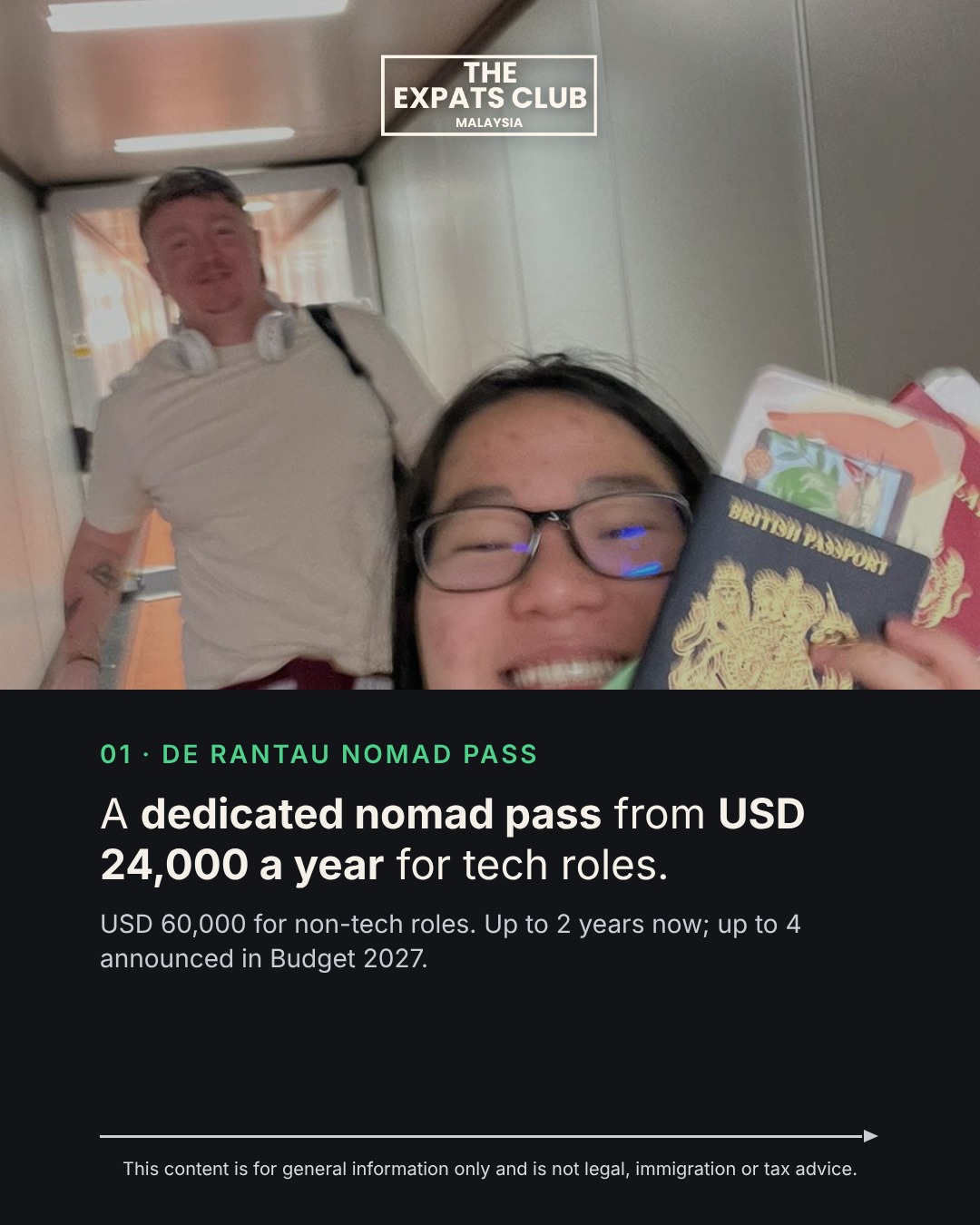
Rent, eating out and getting around typically cost far less than in many Western cities, or in neighbouring Singapore. Condos with pools and gyms are common, Grab rides are affordable, and a great hawker meal won't stretch the budget.
3. English is widely spoken
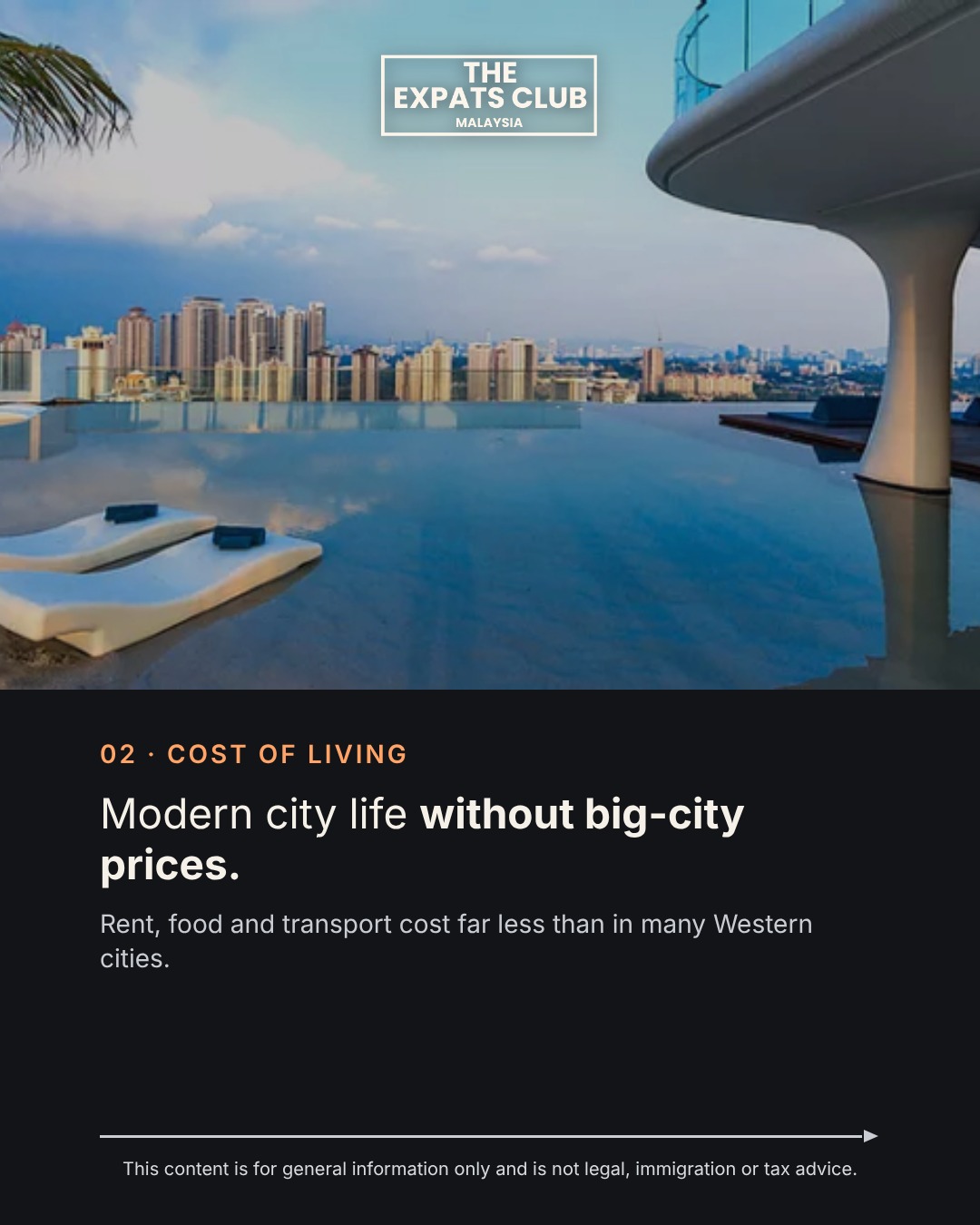
Malaysia ranked 24th out of 123 countries and territories in the EF English Proficiency Index 2025, in the "high proficiency" band (Human Resources Online). Day-to-day life, from renting a flat to seeing a doctor, is easy to manage in English.
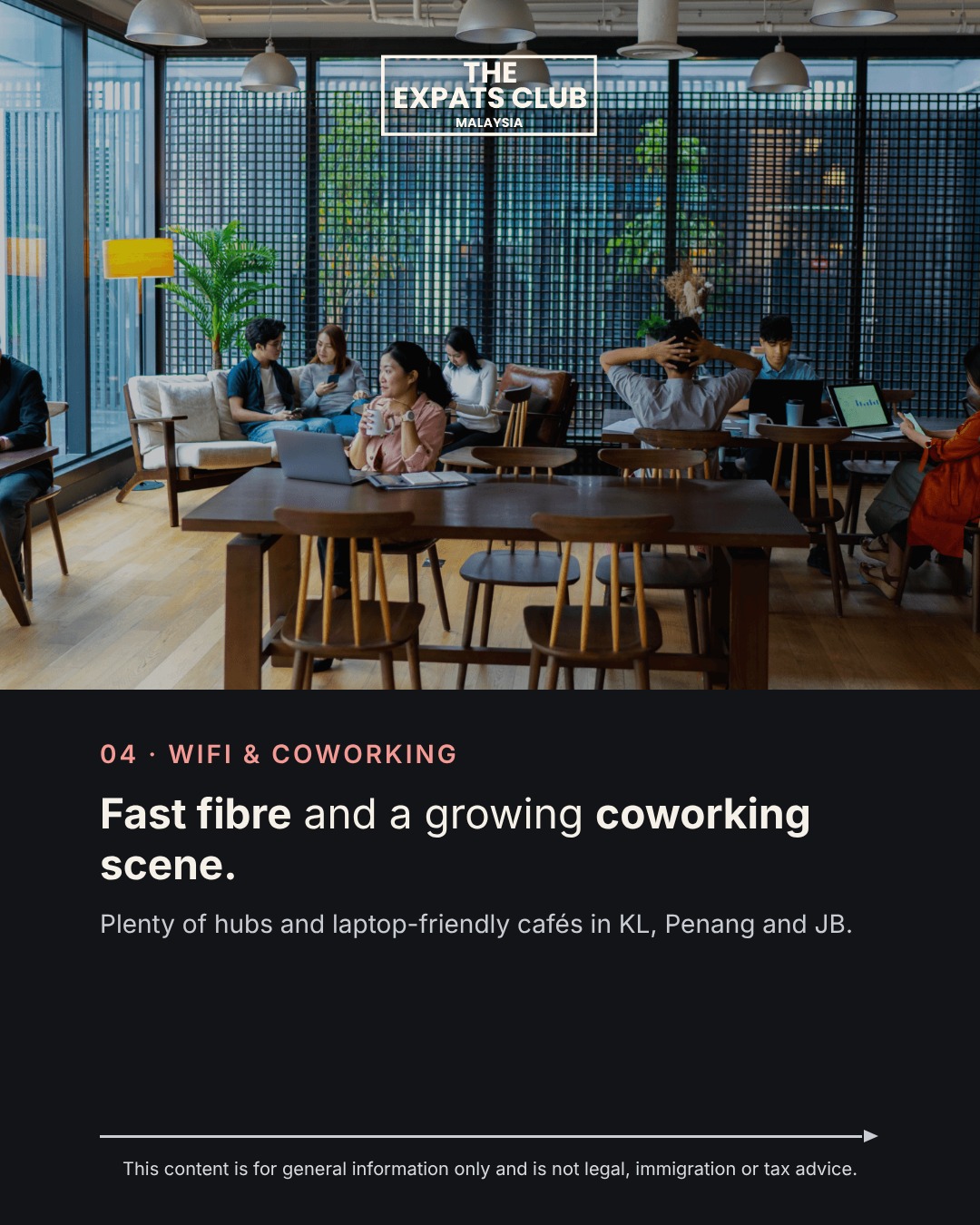
4. Fast internet and a growing coworking scene
Fibre broadband is widely available in the main cities, and there's a healthy choice of coworking spaces and laptop-friendly cafés in KL, Penang and Johor Bahru, so it's easy to find a desk and a community.
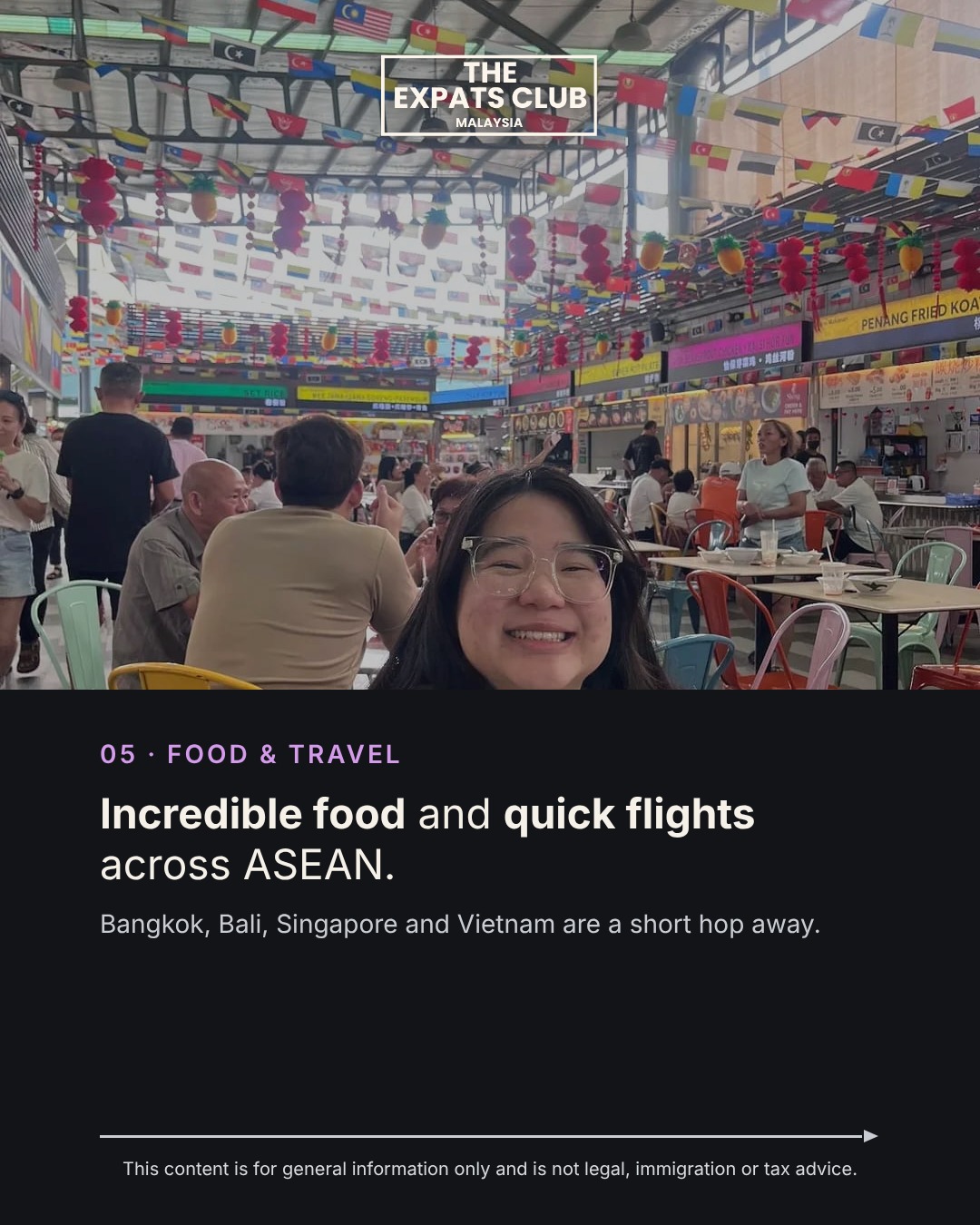
5. Amazing food and easy travel across ASEAN
Malaysian, Chinese, Indian and Peranakan food on every corner, plus short, affordable flights from KLIA and Penang to Bangkok, Bali, Singapore, Vietnam and beyond. Weekend trips are part of the lifestyle.
How the DE Rantau Nomad Pass works
These details come from MDEC's official DE Rantau FAQ (version 10, 28 August 2026). Always check the latest version before applying.
- Income needed: at least USD 24,000 a year for tech roles (for example software, cybersecurity, AI or digital marketing), or USD 60,000 a year for non-tech roles (for example consultants, finance or HR managers).
- Who can apply: digital freelancers, independent contractors and remote workers employed by a company not registered in Malaysia.
- How long: the pass is issued for 3 to 12 months and can be renewed once for another 12 months, a maximum of 24 months under the current rules.
- Fees: RM1,080 processing fee for the main applicant and RM540 per dependant (both including SST, non-refundable), plus an immigration pass fee of RM90 per 3 months or RM360 per year per person.
- Health insurance: you need a valid policy covering you in Malaysia for the whole pass period.
Can my family come too?
Yes. A spouse or common-law partner, children under 18 and the main holder's parents can be added as dependants. A spouse on a dependant pass cannot work in Malaysia under this programme.
What about tax?
It depends on how long you stay and where your income comes from. MDEC's FAQ explains, for example, that remote workers staying 60 days or less are generally not taxed in Malaysia, while longer stays can be. Rules differ for freelancers with Malaysian clients. Because every situation is different, check with the Inland Revenue Board (LHDN) or a qualified tax adviser.
The new 4-year extension: announced, not open yet
In the Budget 2027 speech on 9 October 2026, the government announced that existing DE Rantau holders who reach the two-year limit will be able to stay for two more years, up to four years in total. The Ministry of Digital confirmed this on 11 October, but the conditions and application process have not been published yet, and current expiry dates still apply until MDEC releases the details (Emerhub, 11 Oct 2026). We'll share updates as soon as they're announced.

Thinking of working remotely from Malaysia?
If you're relocating to Malaysia and want advice on anything, reach out. We can help answer your questions and add you to our community. You'll also find free guides at RelocatingToMalaysia.com.
WhatsApp: +60 14-845 9471 · Email: ExpatsClubKL@gmail.com
This article is for general information only and is not legal, immigration or tax advice. Requirements can change, so please check MDEC and official government sources before applying.


